Booking choice: The Camira sailing day, from $180 per person. Check dates Tour details
August to October is the sweet spot: the driest months on record, warm days and calm-ish seas before the summer storms. June and July are cooler and bring the humpback whales. January to March is hot, wet, stinger season and cyclone season at once.
The climate figures below are the Bureau of Meteorology long-term averages for Hamilton Island Airport, the closest station to Whitehaven. Holiday dates come from the Queensland Department of Education.
The quick answer
The best months for the Whitsundays are August, September and October: about 25 mm of rain a month, highs of 23 to 27 °C. June and July are the coolest (about 22 °C) and the best for humpback whales. Avoid January to March if you can: up to 300 mm of rain a month, peak stinger risk and the middle of cyclone season (1 November to 30 April). Book early for Queensland school holidays, above all 12 December 2026 to 26 January 2027.
What is the best month to go to the Whitsundays?
September. It is one of the three driest months, highs are around 25 °C, whales are still about early in the month, and the stinger risk has not yet risen.
August and October run it close. August is a degree or two cooler and is the last full month of whale season. October is warmer, still dry, and is when Cruise Whitsundays starts to call the stinger risk higher. If you want warm water and no rain, aim for late August to early October. If whales matter most, go in July or August.
No month is closed. Tours run all year; the Hill Inlet cruise runs every day except Christmas Day.
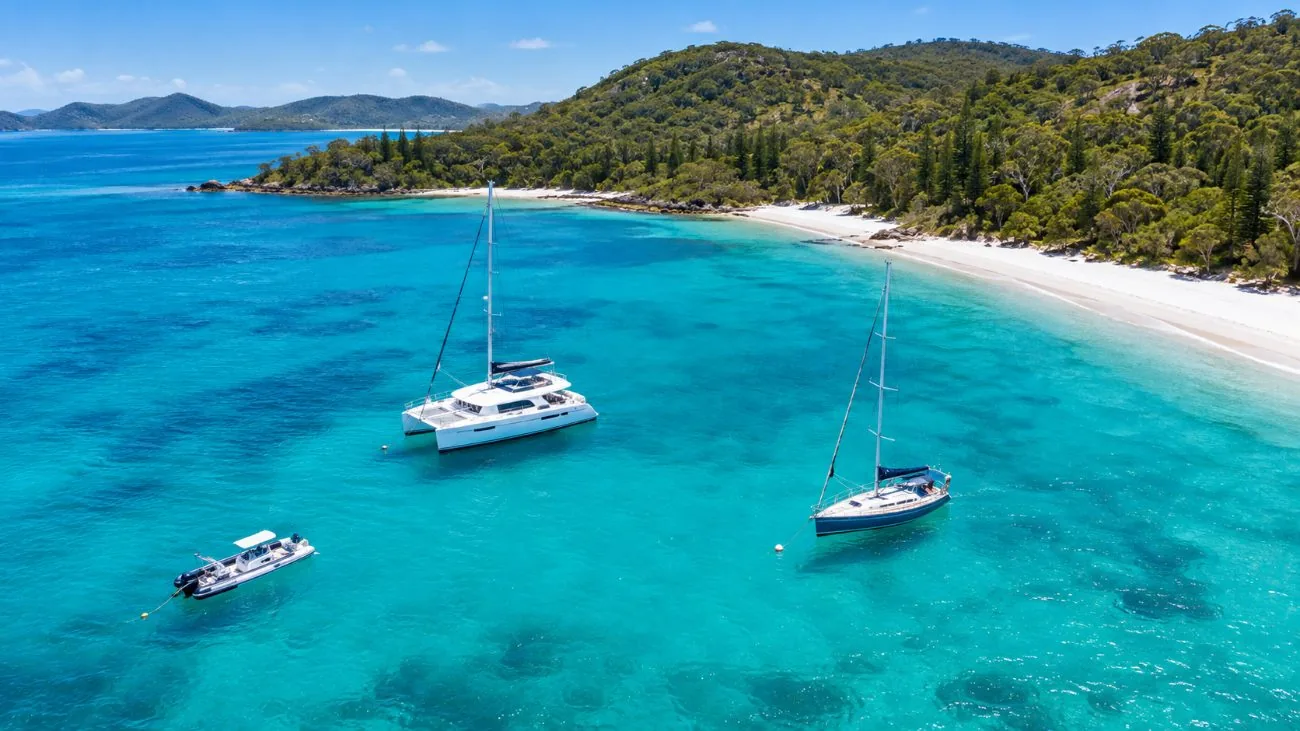
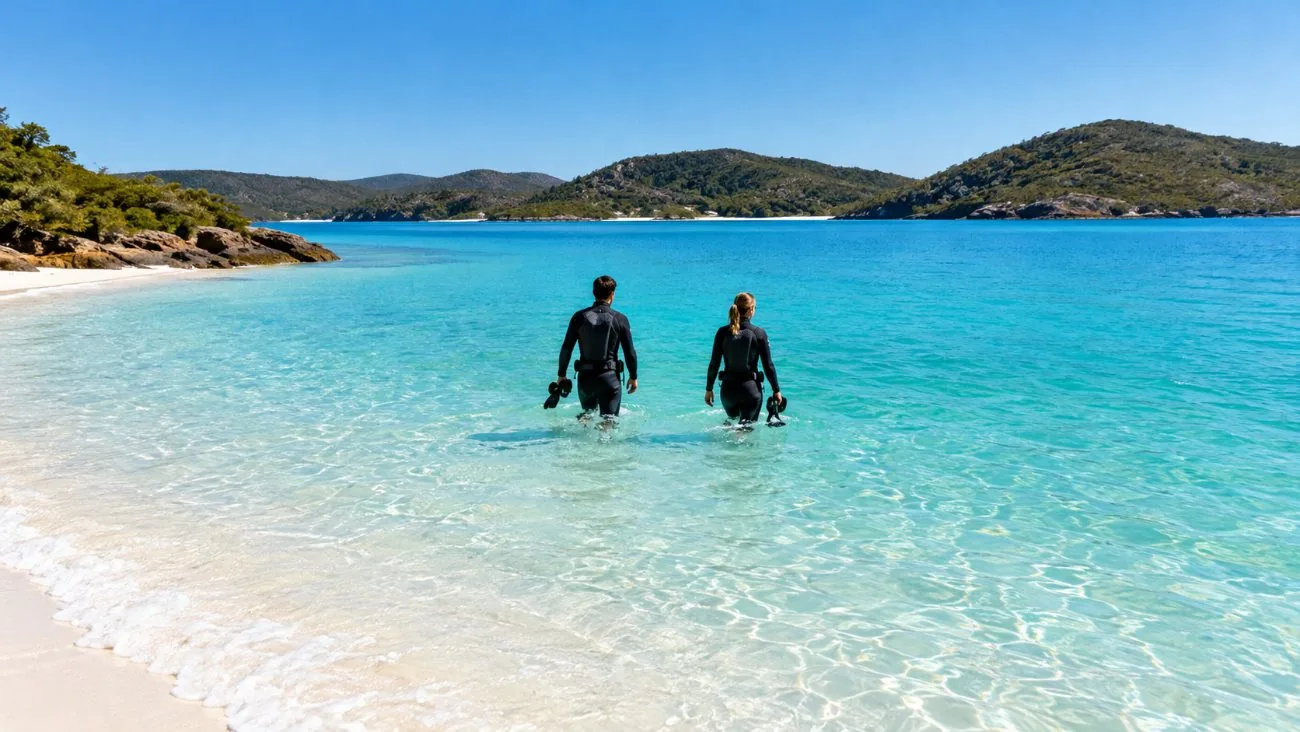
A full day under sail in the dry season: Whitehaven, a BBQ lunch and a reef snorkel.
Check dates for the Camira sailing dayWhat is the Whitsundays weather like month by month?
Warm all year: highs from about 22 °C in July to 30 °C in January. Rain is the big difference, from about 25 mm a month in August to nearly 300 mm in January.
Bureau of Meteorology averages for Hamilton Island Airport (station 033106):
| Month | Mean max | Mean min | Rain |
|---|---|---|---|
| January | 29.9 °C | 24.9 °C | 297.6 mm |
| February | 29.6 °C | 24.8 °C | 293.3 mm |
| March | 28.8 °C | 24.5 °C | 231.2 mm |
| April | 27.0 °C | 22.9 °C | 154.6 mm |
| May | 24.3 °C | 20.7 °C | 95.4 mm |
| June | 22.3 °C | 18.9 °C | 56.9 mm |
| July | 21.6 °C | 18.1 °C | 51.4 mm |
| August | 22.8 °C | 18.5 °C | 26.4 mm |
| September | 25.2 °C | 20.2 °C | 24.6 mm |
| October | 27.4 °C | 22.2 °C | 26.6 mm |
| November | 28.8 °C | 23.5 °C | 74.5 mm |
| December | 29.9 °C | 24.6 °C | 157.4 mm |
Two things the table hides. Summer rain often falls in short, heavy bursts, so a wet-season day can still have hours of sun. And the dry season (May to October) is less humid as well as less rainy, which makes a long walk to the Hill Inlet lookout more pleasant. Tourism Whitsundays puts the water at about 25 °C on average, so it never gets truly cold.
When is stinger season in the Whitsundays?
Stings can happen all year, but they are most common from November to May. Cruise Whitsundays treats October to May as the higher-risk period.
Two kinds of jellyfish matter: the box jellyfish and the tiny Irukandji. The Whitsunday Regional Council puts the peak at November to May and says the best protection is a full-body lycra or neoprene stinger suit, worn even when you are only wading. Stinger nets stop box jellyfish but not Irukandji. If someone is stung: call 000, douse the sting with vinegar, and start CPR if needed.
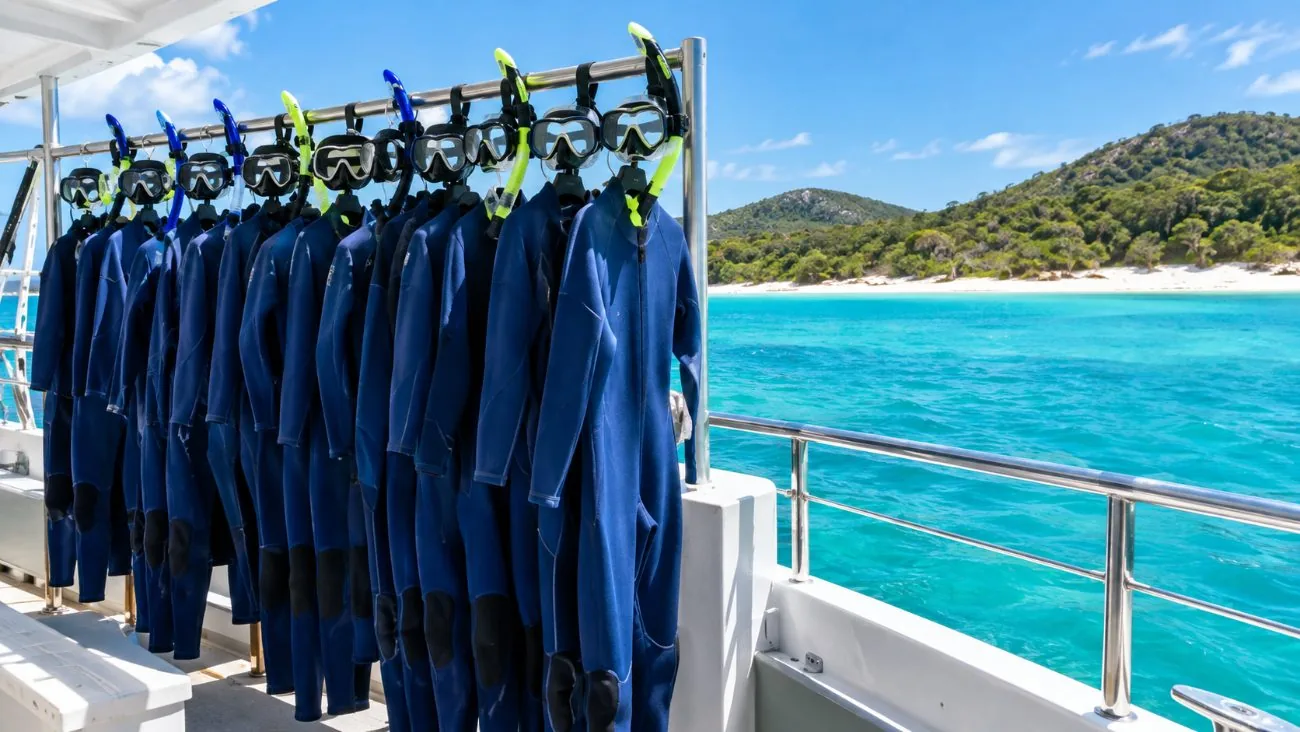
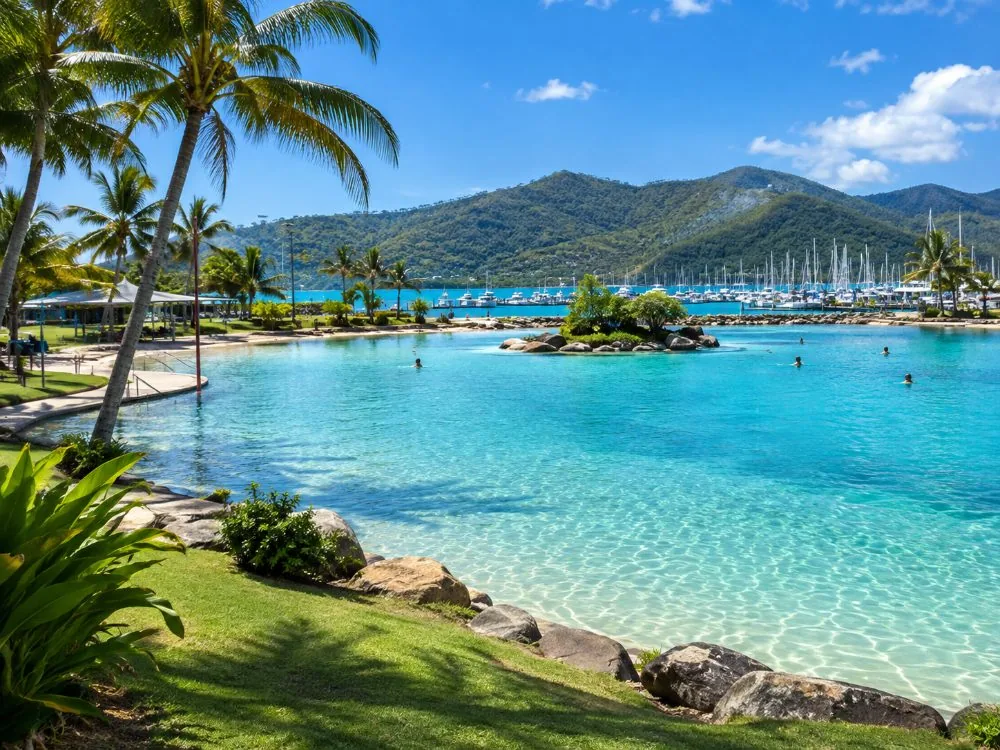
Every snorkel and Whitehaven tour on this site provides stinger suits, so you don't need to buy one. In Airlie Beach itself, the public lagoon on the foreshore is open to everyone, stinger-safe all year and patrolled by lifeguards. The 2026-27 stinger and cyclone season post has this summer's updates.
When should you avoid the Whitsundays?
January to March, if you can. Those are the wettest months, the peak of stinger season and the middle of cyclone season, which runs from 1 November to 30 April.
The Bureau of Meteorology sets the Australian tropical cyclone season from 1 November to 30 April, with about 8 to 9 cyclones a season across the whole country since 2000. Most do not reach the Whitsundays. Some do: Severe Tropical Cyclone Debbie hit in March 2017 and wrecked the Shute Harbour terminal, which did not reopen until December 2021.
Bad weather days mean cancelled boats rather than a ruined holiday. Operators call off trips in strong wind or a cyclone warning and refund or rebook you. That is why we tell summer visitors to book their Whitehaven day for early in the stay, with a spare day after it. Cancellation is free up to 24 hours before on most tours here and 2 days on Cruise Whitsundays trips.
The other time to avoid is the Christmas school holidays if you dislike crowds: the boats fill up early.
When can you see humpback whales in the Whitsundays?
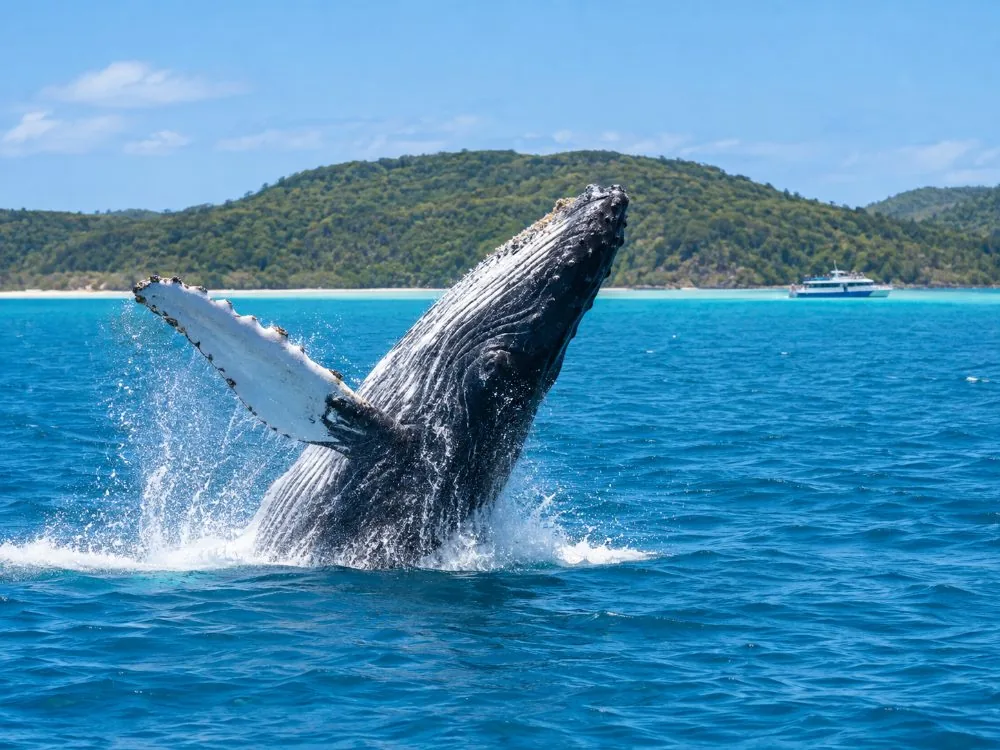
From about May to September, with breeding and calving concentrated from June to September. Sightings are common in season, but no tour can promise one.
Humpbacks come north from Antarctic waters to give birth in the sheltered waters of the Marine Park. Most of the Whitsundays is a Whale Protection Area, where boats must stay 300 m from a whale (GBRMPA), so you watch from a distance and a whale that comes close does so by choice.
Guests on the Whitehaven boats report sightings on the way out. A Camira guest from August 2026 wrote: "We were lucky enough to see some whales on the way to the island." A Thundercat guest that month said the crew stopped the boat for whales. From the air the view is wider: the Heart Reef flight lists whales among the wildlife you may see.
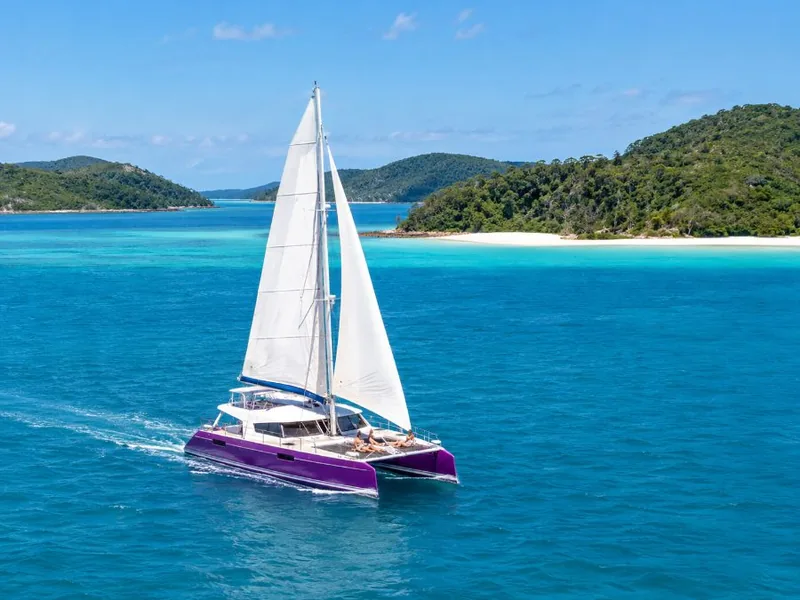
Whale season under sail: the Camira passes Daydream and Hook Islands on the way to Whitehaven, with a BBQ lunch and drinks on board.
Explore the Camira sailing day Tour detailsWhen are the Queensland school holidays in 2026-27?
The next big one is the Christmas break, 12 December 2026 to 26 January 2027. Easter, winter and spring holidays follow in 2027.
Dates derived from the Queensland Department of Education term dates and future dates for state schools:
| Holiday | From | To |
|---|---|---|
| Summer (Christmas) | Sat 12 Dec 2026 | Tue 26 Jan 2027 |
| Autumn (Easter) | Fri 26 Mar 2027 | Sun 11 Apr 2027 |
| Winter | Sat 26 Jun 2027 | Sun 11 Jul 2027 |
| Spring | Sat 18 Sep 2027 | Mon 4 Oct 2027 |
Families from Brisbane and the south fly or drive up in these weeks, and the June-July break lands right in whale season. Book boats and rooms a few weeks ahead. Other states set their own dates, so the busy weeks spill a little either side.
Travelling in the school holidays? Lock in your Whitehaven day early: free cancellation up to 24 hours before.
Check dates for the Ocean Rafting dayWhen should you not visit the Great Barrier Reef?
The reef is open all year. The worst days for it are windy ones and the heavy-rain weeks of summer, when the sea is rough and visibility drops.
Outer-reef trips from Airlie take about 2 to 3 hours each way, and wind makes that crossing long and lumpy. Pick a calm day if you can, and keep your plans flexible. Summer floods can push cloudy water out from the rivers, and that is when fringing reefs close to the islands look their worst.
Bleaching is a summer event too: the Australian Institute of Marine Science recorded mass bleaching in 2024, the fifth since 2016. Most of the reef still has living coral to see, and the reef guide explains what the latest surveys found. For calm seas and clear water, the dry months from August to October are the best bet.
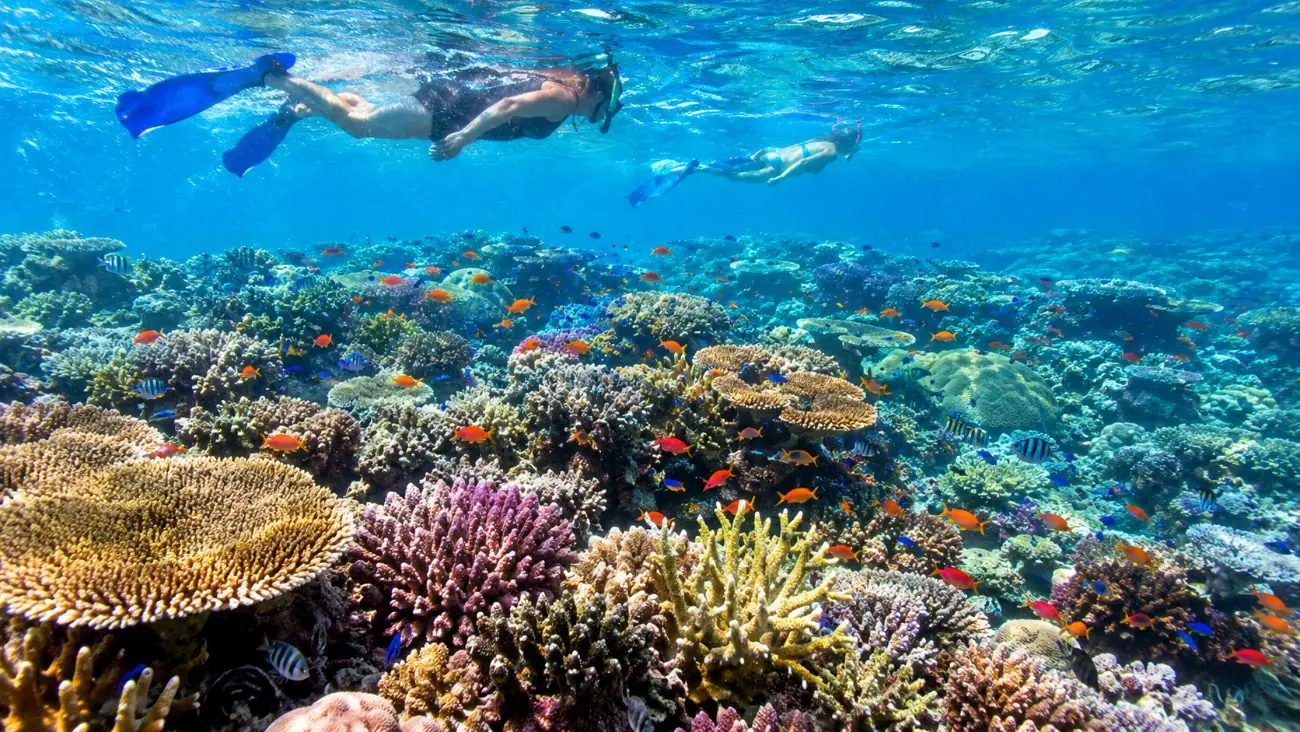
A full outer-reef day at a pontoon on Hardy Reef, with snorkel gear, a semi-sub and lunch.
Check dates for the Great Barrier Reef cruiseWhat time of day is best for a Whitehaven tour?
A full-day tour, leaving between 7:30 and 9 am. You get Whitehaven before the midday glare and a tide-planned visit to Hill Inlet.
Most full-day boats leave Airlie early: Camira check-in is 7:30 am and the Hill Inlet cruise leaves Shute Harbour at 9 am. The order of stops is set around the tide on the day, so trust the crew.
The half-day cruise is the only tour here with a choice: the morning run (7:15 am to 2:30 pm) or the afternoon one (11:35 am to 6:10 pm). In summer the afternoon is hotter and storms build after lunch, so take the morning. Neither goes to Hill Inlet.
Frequently asked questions
Is it worth visiting the Whitsundays in the wet season?
Yes, if you plan around it. Boats still run most days, the water is warm and the islands are green. Wear a stinger suit, book your boat day early in the trip and keep a spare day for bad weather.
Is the water warm enough to swim in winter?
For most people, yes. Tourism Whitsundays gives an average water temperature of about 25 °C, and winter highs on land are around 22 °C. A wetsuit or stinger suit adds warmth on snorkel stops.
Is October a good time to visit the Whitsundays?
Yes. October averages 26.6 mm of rain and highs of 27.4 °C. Stinger risk starts to rise, so wear the suit the tours provide.
Do Whitsundays tours run all year?
Yes. The main Whitehaven and reef tours run year-round and cancel only for bad weather, with a refund or a new date.
Ready to book
Choose your tour
Free cancellation on every option, up to 24 hours or 2 days before depending on the operator. Prices are from-prices in USD and move with the season.
Camira: Full-Day Sailing to Whitehaven
- Return sail to Whitehaven, Hill Inlet walk when the tide allows
- Fringing-reef snorkel (no flotation provided)
- BBQ lunch, morning and afternoon tea
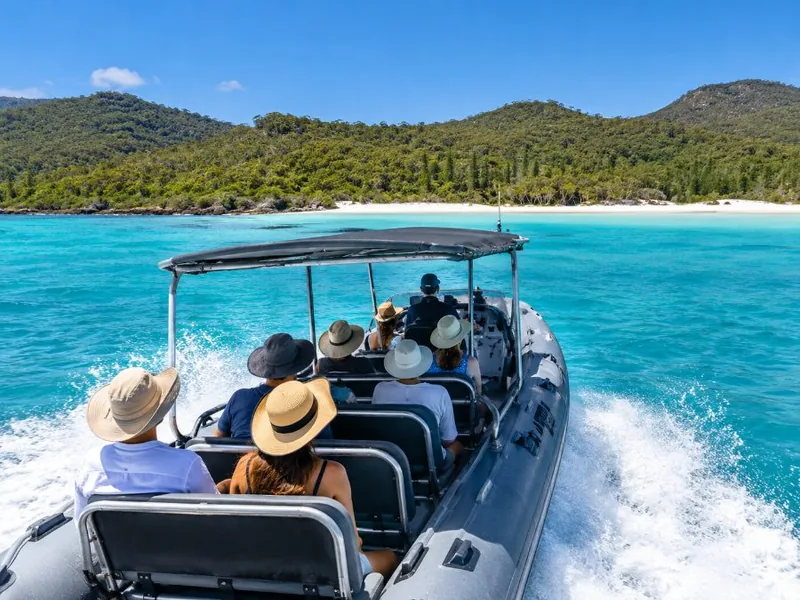
Ocean Rafting: Snorkel, Hill Inlet & Whitehaven
- Guided national park walk to the Hill Inlet lookout (north option)
- Over an hour of snorkelling, gear and stinger suit
- Lunch on the beach, morning and afternoon tea
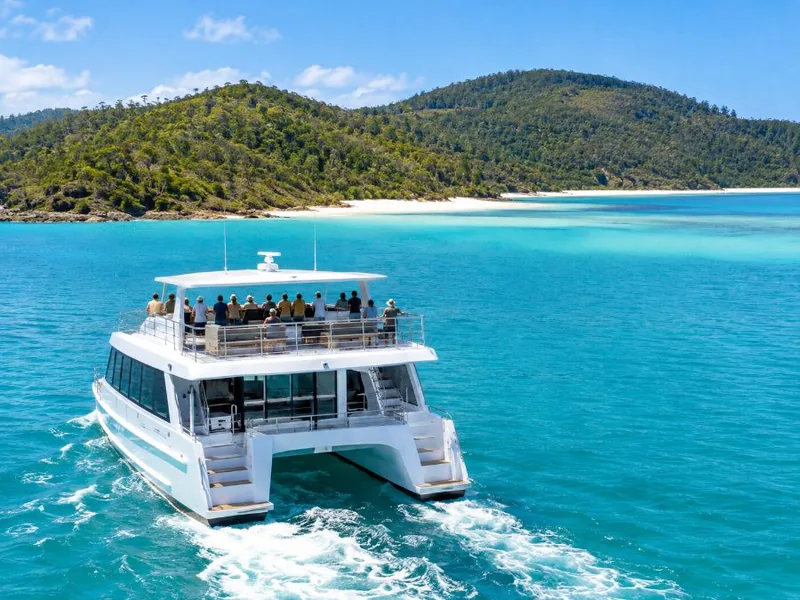
Hill Inlet Lookout & Whitehaven Cruise
Big calm catamaran, guided lookout walks, for non-swimmers too